
So you want to become a health coach – but where do you even start?
So many online seem to be calling themselves one, yet nobody agrees on what it actually means.
Do you need a university degree, or can you self-educate?
What about blood work – are you even allowed to interpret it legally?
And if so many “qualified” professionals struggle to get their clients’ results, why are unregulated coaches sometimes changing lives more effectively?
In this article, I’m going to break misconceptions and show you why nearly every coach is technically “out of scope.”
By the end, you will know the safest, fastest option to become a health coach, help people at the deepest level and whether $30,000 – $60,000 of University debt and 4+ years of your life is worth it.
I’m Saad, a functional health coach who started out as a personal trainer and, over the last 10+ years, have coached between 600–1000 clients.
I now run a school called Trinity and ZION that provides a better alternative pathway to University for coaches.
I am not writing solely to promote myself, but I want to be transparent about my biases. I’m writing this because I often get asked this question and want to provide a pathway to a younger version of myself who just wanted to learn and help people.
My journey has taken me from working with everyday people in the gym to supporting athletes, entrepreneurs, and professionals dealing with complex health conditions – from gut issues and hormonal imbalances to chronic fatigue and metabolic dysfunction. I didn’t get here overnight. I obsessively built my skill set layer by layer, moving from strength and conditioning into functional health, nutrition, psychology, and eventually blood work interpretation.
Health Coaches Are “Made Up”
They are not a protected term legally. Anyone can call themselves that and most of the people you look up to or work with clients call themselves some variation of a health coach.
A health coach is a professional who uses holistic, evidence-based tools spanning behaviour change, psychology, physiology, nutrition, gut health, recovery, lifestyle – and, where appropriate, interpreting blood work – to address the root causes of a client’s health issues and psychological barriers. They employ education, collaborative problem-solving with other health professionals, by placing the client at the centre of the process, ensuring change is personal, caring, and long lasting.
There’s a difference between someone who simply calls themselves a health coach and an AHPRA-registered health professional.
AHPRA is Australia’s regulatory body that registers health practitioners.
It creates legal protection, quality assurance, credibility and access to thing’s like functional lab testing, and soon, I’lll explain how all these health coaches are getting around it.
If you want to be seen as a health coach but also have the credibility and protection of being AHPRA-registered, the only option is to qualify in one of the 16 protected professions or similar field.
| Profession | Years to Qualification (Full Time Study) | Approx Cost (AUD) | Approx Study Hours |
|---|---|---|---|
| Psychologist | 6–7 years | $30k–$60k | 7,000–8,000 hrs |
| Medical Practitioner | 6–7 years (+10+ w/ specialty) | $60k–$120k+ | 11,000–12,000 hrs |
| Dietitian (APD) | 4–5 years | $25k–$50k | 5,000–6,000 hrs |
| Naturopath | 3–4 years | $20k–$40k | 3,000–4,000 hrs |
| Health Coach (Unregulated) | 3–12 months (certificate or online program) | $2k–$10k+ | 100–1000 hrs |
Do you see why so many people have turned away from the traditional education system and chosen a different path?
Because the cost is prohibitively expensive in time and money for the ROI.
The question is, isn’t there a better path that doesn’t take so long and cost so much?
There is.
Examples
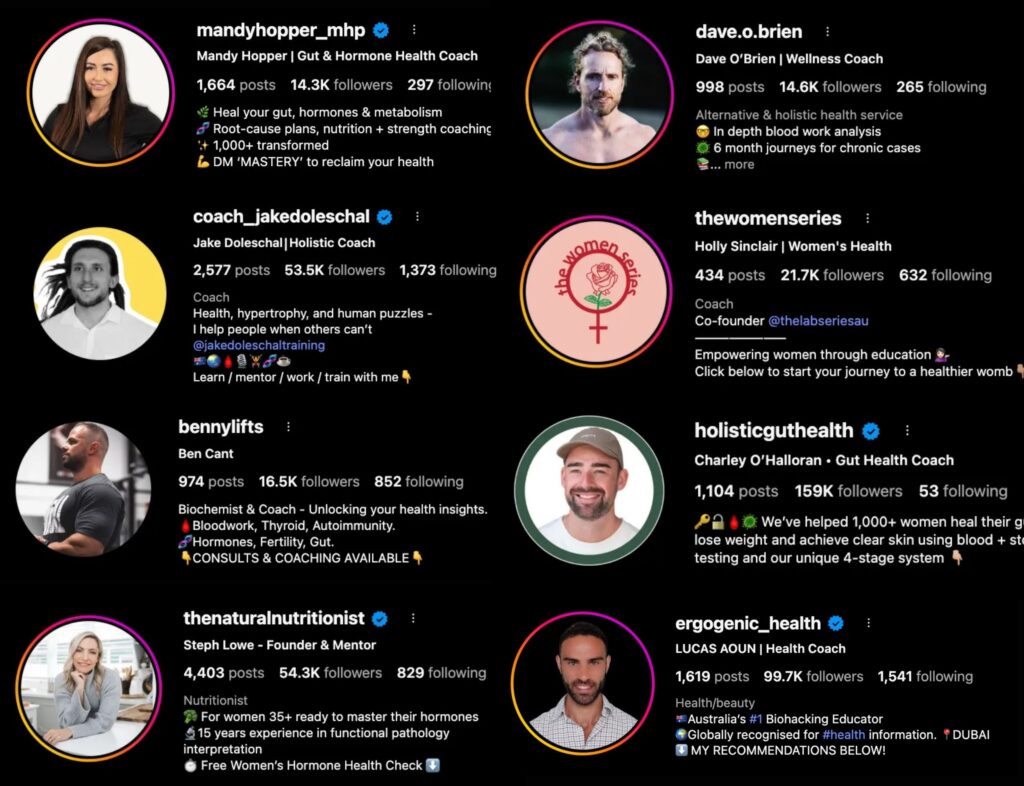
To give you some hope, here are a list of very effective health professionals who have changed thousands of lives without becoming Doctors, dieitons or any registred professional but have done so through thousands of hours studying functional medicine education, mentorship and some teririty education.
They have done so safely, ethically and often more effectively than many traditionally trained professionals whilst being able to grow a business that also supports their families. I personally know each one of these professionals and can attest to their character and skillset.
The Elephant in the Room: Scope of practice and how everyone is outside of scope
“But what about ‘scope of practice’ and legality, won’t I get in trouble?”
I get this question a lot from the coaches I’ve mentored.
Scope of Practice refers to the boundaries within which a professional may legally and ethically work
Let’s be clear: scope of practice is real, but it’s also one of the most misunderstood and misapplied ideas in the entire health industry.
If you’re a PT, the law says you can train people and you can give nutrition advice aligned with the Australian dietary national guidelines.
Remember that pyramid they teach you in high school? Yeah your advice is contained to that (except now it’s a circle).
If you’re not a doctor, you can’t diagnose or prescribe.
But what does this mean and how could almost every coach and trainer be out of scope.
But here’s the truth no one tells you:
- The Australian Dietary Guidelines (ADG) are designed for population-level health, disease prevention, and public guidance. They’re not optimized for athletes, body recomposition, or high performance AKA most of your clients.
Here are precise points of divergence, showing where many coaches are operating outside what the AusREPs scope allows versus what they go on to give or promise:
AusREP is an Australian Registered Exercise Professional (formerly Fitness Australia).
It’s an industry registration system used by to recognise fitness professionals who meet national standards for qualifications, continuing education, and a code of ethics.
It’s not regulated, there’s no governing body – it’s essentially made up.
Here’s how almost every coach, trainer without a degree is outside of scope.
| Coaching Practice | What AusREPs / ADG Allow | Where the Clash / Grey Area Occurs |
|---|---|---|
| Coach sets protein intake of 2.0 g/kg for body composition goal | ADG gives ~0.75-0.84 g/kg/day for general healthy adults (baseline). | The coach prescribes protein above ADG levels, targeting physique/performance optimisation – this is outside AusREP’s “general advice” scope. |
| Coach prescribes macro splits (e.g. 40% protein, 30% fat, 30% carbs) for a cutting phase |
AusREPs may give general advice aligned with ADG/Eat for Health: food groups, portion sizes, balanced diet. ”Calculation of the number of grams of macronutrients (carbohydrate, protein, fat) required … is outside of the AusREPs’ scope of practice.” |
Macro splits = prescribing exact nutrient ratios (grams/percentages) → listed as “outside scope” in AusREP documents. |
| Coach recommends creatine or whey protein |
AusREPs can only discuss healthy eating using ADG. They cannot advise on supplements. “To suggest or advise that a client use nutritional supplements for a performance goal or medical situation is beyond the scope of practice for AusREPs.” |
Guidelines state: “To suggest or advise that a client use nutritional supplements” is explicitly outside the scope. Yet almost all coaches/PTs recommend basic supplementation. |
| Coach writes detailed 7-day meal plan for a body recomposition client | Allowed: “Provide examples of meals and snacks” or patterns consistent with ADG. | Personalized meal plans “detailing nutritional composition to meet a specific goal” are outside the scope unless you are an APD/Sports Dietitian. |
Yet almost all coaches/PTs recommend basic supplementation. | | Coach writes detailed 7-day meal plan for a body recomposition client | Allowed: “Provide examples of meals and snacks” or patterns consistent with ADG. | Personalized meal plans “detailing nutritional composition to meet a specific goal” are outside scope unless you are an APD/Sports Dietitian. |
Yes, you can get a degree in the health sciences (I have one), it gives you some more wiggle room but there’s still many common practical coaching scenarios where you will be out of scope.
- Nobody is actually enforcing “scope of practice” in day-to-day coaching.
There isn’t an AHPRA policeman waiting to kick down the door because you suggested magnesium or looked at a blood panel with your client. But your state’s health complaints commissioner does oversee unregistered practitioners, and they act when there’s real harm. So the question isn’t “is anyone watching,” it’s “am I competent, ethical, and clearly communicating that I educate rather than diagnose.
Non-registered health practitioners must:
- “must not make claims to cure cancer or other terminal or incurable illnesses”
- “must not dissuade clients from seeking or continuing with treatment by a registered medical practitioner and must accept the rights of their clients to make informed choices in relation to their health care”
- “are required to have an adequate clinical basis for treatments”
- “must keep appropriate insurance”
- “must provide health services in a safe and ethical manner including within accepted professional standards and within their experience, training and qualifications”
The real question is not “will I get in trouble?” but: Are you competent, ethical, and clear in your communication?
- If you’re telling people you’re a doctor when you’re not – you’re out of integrity and yes, that’s illegal.
- If you’re diagnosing disease – that’s dumb and you’ve stepped out of bounds.
- But if you’re saying: “I’m not here to diagnose or treat you, I’m here to help you optimise your sleep, nutrition, recovery, and training – and part of that means teaching and educating you on eating you how to understand your own health data” – then you’re in alignment.
The irony is that the best doctors I know want exactly this.
They want coaches who can prepare clients better, educate them, and support them with lifestyle change – because most GPs don’t have the time.
So how can you be more responsible as a coach?
- Be transparent – use disclaimers, waivers, and clear language: “This is educational, not medical advice.”
- Don’t be stupid – I’ve never said to my clients “you have this disease or condition” (unless a Doctor or specialist has confirmed it). Speak in degrees of probability. Example, “The data and research is indicating that you may have SIBO based on X and y markers and symptoms according to the research.”
- Collaborate – share findings with GPs, naturopaths, dietitian’s. Be the bridge, not the lone ranger.
- Insurance – Hold professional indemnity + public liability that explicitly covers online services and your actual activities (exercise programming, general nutrition education). Ask the insurance provider to add supplement advice, medical nutrition therapy etc so you can align your offer and disclaimers.
- Focus on competency – results and proof of concept speak louder than credentials.
The uncomfortable truth is this: almost every personal trainer, coach and self-proclaimed health coach you look up to right now is technically “out of scope.”
They recommend supplements, give calorie targets, or interpret labs.
But they’re changing lives – not sitting in a courtroom.
Why?
Because they’re competent, they don’t harm; they have a very solid understanding of physiology and communicate with nuance, rather than black and white prescriptions.
So instead of living in fear of red tape, ask yourself:
Do I want to be a coach who hides behind arbitrary rules, or one who becomes undeniable by being skilled, ethical, and effective?
That’s how I think about it.
Scope matters – but it’s not the prison most coaches believe it is.
To argue against myself I tried to find someone who has gone outside of scope and done harm.
The most well-known case is Barbara O’Neill. In 2019 the NSW HCCC permanently banned her from providing any health service in NSW.
She was banned for claiming to cure cancer with bicarbonate soda and telling people to refuse vaccines and antibiotics.
Guess what he was a degree qualified naturopath, but they didn’t try her under some special naturopath law, because there isn’t one.
Naturopathy isn’t a registered profession either.
They tried her under the exact same Code of Conduct for unregistered practitioners that governs health coaches and PTs.
Her naturopathy training gave her little extra legal protection. The law treated her as what she was in its eyes, an unregistered practitioner judged on conduct, not credentials.
It’s the whole argument of this article proven by a regulator: the title doesn’t protect you unless you are an allied health professional registered with AHPRA or physician.
The craziest part is this woman just relocated to the America a few years after because she was only banned from practicing in New South Wales. She still practices, and actually has millions of followers and, assumingly, millions of dollars.
I understand unregistered health professionals want to do the right thing and they’re afraid of what can happen if they “say the wrong thing”. Well this women intentionally made dangerous claims while having a very large social media account and basically nothing happened to her. Yes, she was banned in New South Wales, but she simply just moved states. I’m not saying it’s impossible for it not to happen to you, but simply putting into perspective the relative risk of this argument.
How can Universities compare to self-education?
Competence isn’t a monopoly owned by degrees. Degrees prove minimum standards, not mastery. Mastery is proven through results and repeated effective practice.
Yes, universities provide deep training. But plenty of dietitians, naturopaths and even doctors who can’t get long-lasting client results because they cling to conservative guidelines and don’t integrate holistic methods.
Meanwhile, many coaches without “formal” credentials consistently change lives, safely, because they’ve built skill, case volume, and frameworks that work.
Both work. The point is integrating the two together in collaboration.
Here’s the crucial thing to understand: a university is an institution, not a sacred fountain of truth.
It is a made-up structure created to organise knowledge. Its curriculum is built on the foundation of research — peer-reviewed studies, textbooks, and systematic reviews. And that very same research is publicly accessible to anyone willing to search PubMed, textbooks, or courses outside the university system.
Universities also provide structured synthesis – which is a great and very useful. It’s curriculum designers translate an overwhelming amount of research into learning outcomes, assessments, and professional competencies.
But so do the best courses, and something I have relentlessly dedicated my coaches school, ZION, as well.
So the question becomes: is the value in the institution itself, or in the knowledge it packages?
Philosophically, universities were founded as places where scholars could gather to question, debate, and systematise knowledge. They were built on the idea of gatekeeping expertise – you had to be admitted to sit under the masters, to hear the lectures, to access the libraries. But in a digital world where those very lectures, textbooks, and papers are on YouTube, the monopoly has weakened.
“You can watch lectures by the best universities – including Harvard, MIT and Stanford on topics of nutrition, physiology, biochemistry, and medical sciences.
A degree now guarantees you’ve followed a structured path, met minimum competency standards, and been assessed under a central authority. That has value. But it doesn’t mean the information is unique, nor that mastery can’t be achieved outside that path.
Self-education, in contrast, is decentralised. It requires discipline, curation, and a different kind of rigor. It lacks the formal stamp of credibility, but it allows the learner to go beyond institutional blind spots – to follow emerging evidence, challenge orthodoxy, and integrate across fields faster than a university curriculum that takes years to update.
So the real power isn’t choosing either university or self-education.
It’s recognising that both draw from the same underlying well of knowledge – and that the most effective practitioners are those who integrate the credibility and structure of the academy with the adaptability and curiosity of the self-taught.
“Just trust the Doctor” – how Doctors and the medical system are failing our clients
‘Just trust the doctor’ sounds safe – until you see where the system consistently underdelivers: time, nutrition literacy, and longitudinal problem-solving and Why Clients Need Coaches Who Can Bridge the Gap”
Many clients come to health coaches after being dismissed by conventional healthcare. While I’ve seen hundreds of terrible stories of clients being gaslight, dismissed, or told “it’s all in your head” by medical professionals, I still believe in collaboration rather than competition.
Many health coaches will publicly shit on Doctors. I love Doctors, they save lives – if it didn’t take 8 years of my life I would probably be one.
The best approach isn’t to vilify doctors but to recognise the limitations of our current healthcare system. Most GPs have 6-15 minute appointments and are trained primarily in acute care and disease management rather than optimisation or prevention.
Instead of positioning yourself against doctors, position yourself as the bridge that helps fill gaps in the conventional system – the person who has time to listen, educate, and support implementation of lifestyle changes while collaborating with medical professionals when needed.
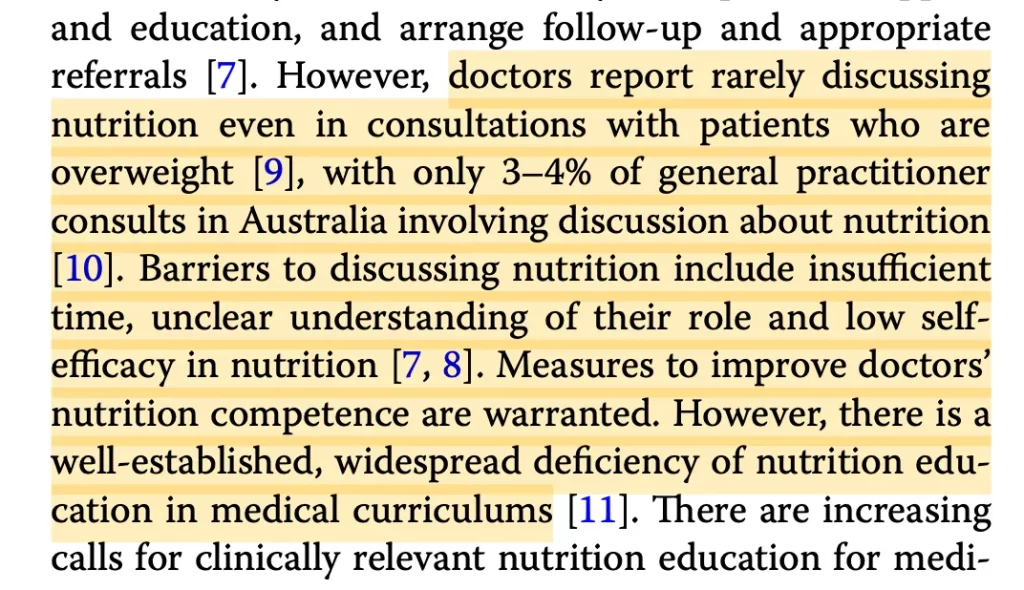
Most Doctors kind of suck at Nutrition
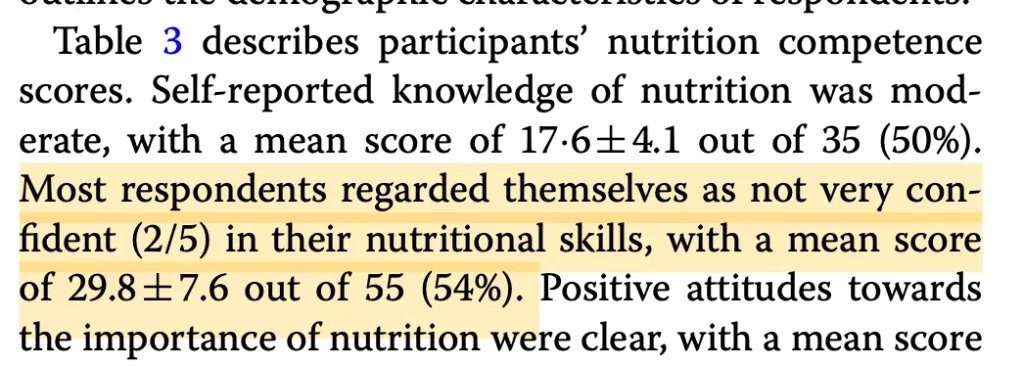
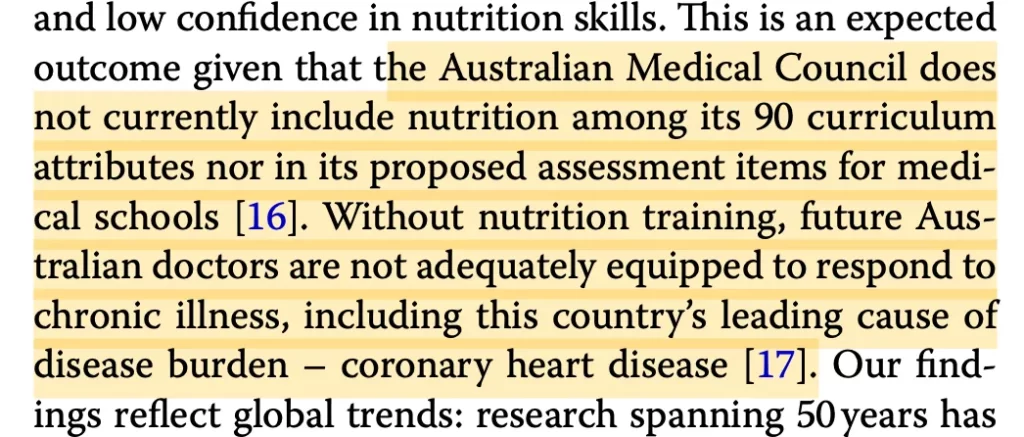
A 2022 study highlights the significant gaps and why the need for more holistic, better-trained health and nutrition coaches is severely needed for our clients.
Even many Doctors express a lack of clarity and confidence in interpreting blood tests
Research from the Royal Australian College of General Practitioners found that GP registrars had the most difficulty with test ordering and interpretation in cases of “fatigue, menopausal complaints, arthritis and menstrual problems.”
The same study showed that “pathology tests that participants reported as most difficult to interpret were hormone assays (67%) and infertility/pregnancy (38%) tests.” In other words, the very issues most health coaches deal with day to day – tiredness, hormonal imbalances, menstrual irregularities – are the areas where many doctors themselves feel least equipped
This isn’t about replacing doctors. It’s about building the bridge clients actually walk across. Which I will shortly explain.
But how can a PT/coach read bloods, it’s so complex “they don’t know enough”
A Cert III/IV in Fitness, a weekend course and some YouTube videos are not enough to competently interpret blood work by any stretch. Coaches who do the bare minimum, read a marker or two, and then make sweeping claims. That’s reckless, lazy and shouldn’t happen.
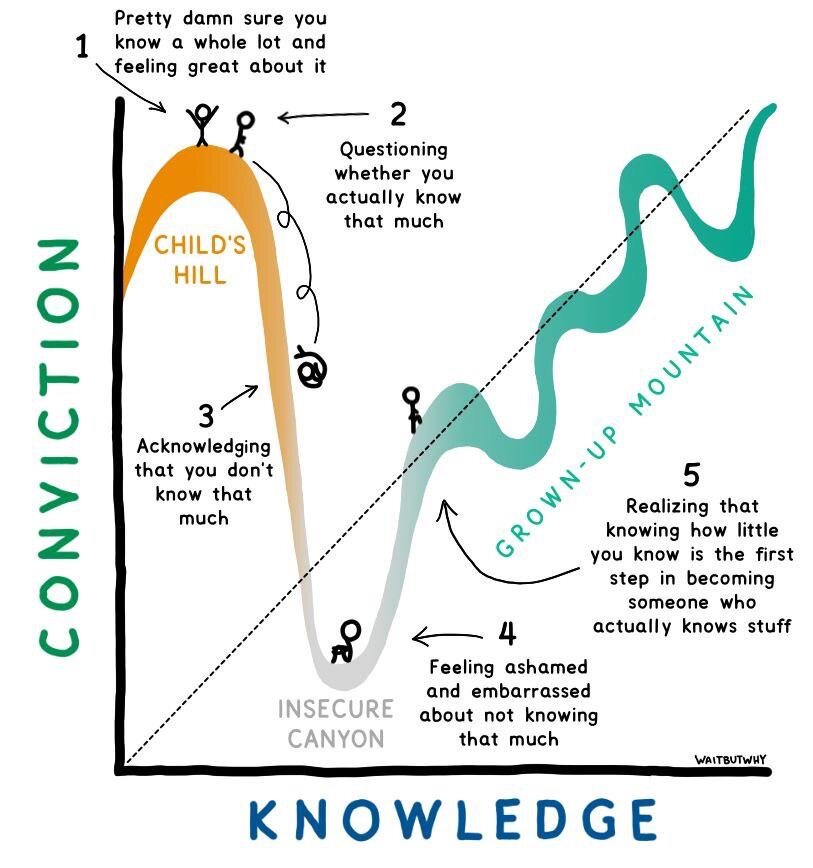
I’ll admit, I was overzealous in my early coaching years. I wanted to help people and work use blood work so I overstated my own competency in this area. I was humbled when I got mentored in blood work by a biochemist. I realised how little I knew. I took down blood work on my website and proceeded to surf the Dunning Krugar curve.
The difference between “PTs dabbling” vs “coaches mastering”
There are coaches who’ve spent thousands of hours studying functional medicine, physiology, nutrition, and lab interpretation through mentorship, post-grad style education, and relentless self-study. Many of them know more about the interplay of nutrition, supplements, biochemistry and psychology than the average GP – not because they’re smarter, but because either doctors aren’t sufficiently trained in those domains.
On average, Australian medical students get only 20–25 hours total of nutrition teaching across the entire 6-year degree
It’s not about the title of being a coach vs a Doctor.
It’s about the competence, education and practical experience beyond the certificate or degree.
University is not the only pathway to establish that competence; there are other pathways.
Coaches in this space often do undergo structured, multi-year continuing education, case mentorships, and hundreds of hours in applied practice with feedback loops.
That’s exactly what many have done with blood work, hormones, gut etc: they didn’t stop at the PT cert or degree.
Your Pathways to Becoming a Great Health Coach
Let’s say you want to become a health coach who uses functional medicine to support your clients because you know that it has the best chance to fix their health problems the fastest.
Path 1 – Doctor
- Become a GP and specialise in integrative medicine. ~8 years.
Path 2 – Naturopath
- 4 years.
- A naturopath is trained to holistically assess functional disturbances and apply herbal, nutritional and lifestyle medicines, suggesting interpreting assessments, including possibly lab/blood work.
- Naturopaths cannot officially “diagnose” diseases under the law.
- The legal scope of a naturopath is unregulated. There are no specific laws or government-backed registration that define or control who can practice as a naturopath or what they can do.
Path 3 – The Red Pill – Coach First
- You need to develop a good coaching skillset first. Start coaching while pursuing education. Personal training is a great start for everyone as it develops critical skills in communication, the ability to convey complex concepts simply, adapt plans based on real-time feedback, and interpersonal skills like emotional intelligence.
- Enrol in specialised functional medicine schools that stay on the cutting edge and teach you what you would learn in 4 years in University, in one. I own one called Trinity.
- Obsessively self-educate and develop an undeniable skillset that rivals and eventually surpasses university graduates. All of the health coach examples mentioned earlier have done that.
- Mentor directly with established coaches who are already doing the work you aspire to do.
- This path is the fastest to create real impact in people’s lives and is for those who value autonomy and freedom. It allows you to start making a difference immediately while building your expertise through real-world practical experience and education.
What About Blood Work?
For ordering labs without being a doctor or naturopath:
- Use direct-to-consumer testing companies that don’t require practitioner approval.
- You can see some examples here that I send to my client patients.
- Find good Doctors to collaborate with. They can order clinically relevant tests when indicated.
Remember: The most successful coaches focus on building competence and helping clients get results, not collecting credentials. Your ability to safely and effectively guide people toward better health matters more than the letters after your name.
This is coming from someone who has letters after his name.
Final thoughts
Becoming a health coach isn’t about chasing letters after your name or ignoring the rules altogether – it’s about building competence that gets excellent results, operating ethically, and collaborating with the wider healthcare system. Universities provide structure and credibility, but 1/3rd of Australian adults have a degree. A degree has never been LESS competitive to have. Many great self-education pathways are available to you, and they responsibly teach the depth of functional medicine to similar standards as a University.
Whether you pursue the long road of medicine, the naturopathic route, or the “coach-first” path of mentorship and relentless study, the goal is the same: to help clients safely, effectively, and with integrity. Focus less on collecting credentials and more on becoming undeniable through skill, results, and collaboration. That’s how you rise above the noise and create lasting impact as a health coach.
That’s why Trinity and ZION Coaches Academy exist – because I believe the world doesn’t need more degrees, it needs more coaches who are obsessively great at what they do.
If you feel aligned to walk your own path, this may light your soul up…
https://zion.strengthofsaad.com/
Saad